Let’s go beat someone up! But no seriously, does this prevent pain or something ? What do these bandages actually serve ?
It keeps your bones aligned to prevent injury, compresses soft tissue to make the fist more rigid, and pads the knuckles. Skull bones are sturdier than hand bones, and even if you know what you’re doing there’s a high risk of damaging your metacarpals if you punch someone barehanded. It’s why they recommend if you find yourself in a fight unprepared to bunt their nose with the butt of your palm, because if the other person tucks their head and you end up hitting their forehead instead it’ll do a lot less damage to your palm than your knuckles.
Tumblr teach’n you how to fucks someone’s shit up.
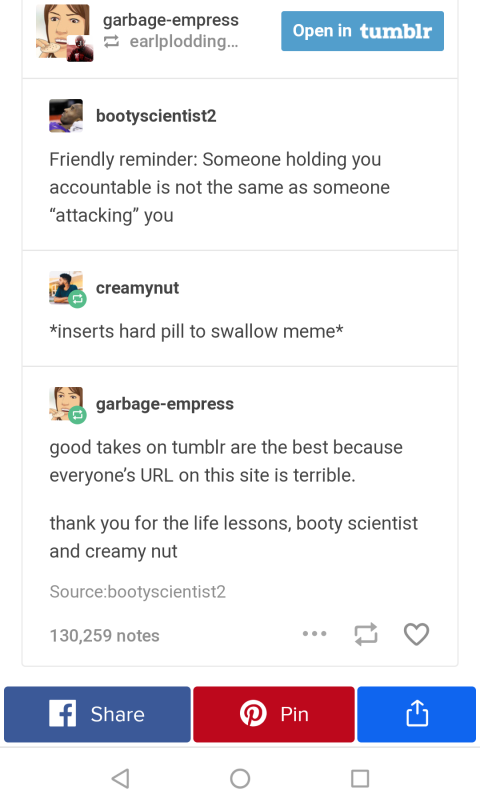
@pregnantseinfeld informed me that I was in a Buzzfeed article (with @creamynut and @bootyscientist2) a few months ago and had no idea.
Turns out that Buzzfeed just embeds Tumblr posts.
So if they take a post you’re in and say, embed it from your blog:
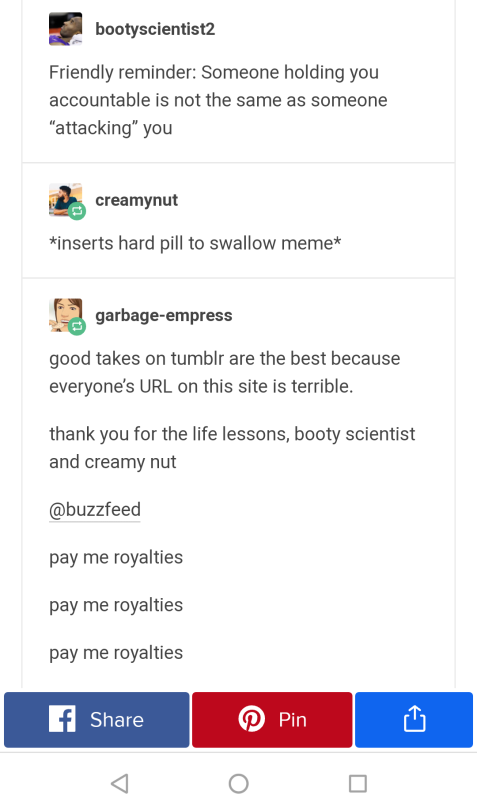
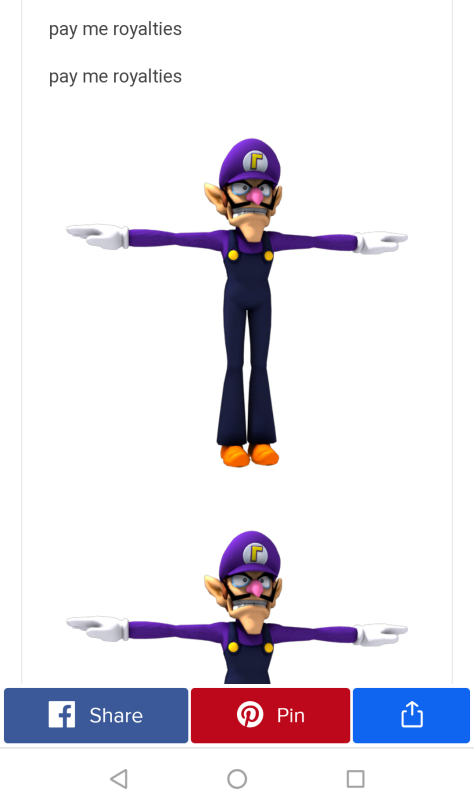
You can go back to the post and edit it to whatever you want and it will appear in the article like that. So you can do things like add “pay me royalties” 100 times
imagine hearing “hall of the mountian king” for the first time in 1875. the sheer chaos imagine being some norwegian aristocrat and sitting down for a nice day at the symphony and getting your entire wig and life snatched right before your very eyes
creating venom without spider-man has created the greatest dynamic between eddie and venom that has ever existed. they aren’t bonding over being hating peter parker, they’re bonding over the fact that they’re both complete losers. they’re two losers that love to eat junk food out of the trash and they can combine together to form an eight foot tall space monster.
the main piece of advice i have for students is this: learn how to fail and persevere. it is a skill that will help you in life far more than perfect grades.
think of failure impersonally. when you fail, you have just eliminated one method that doesn’t work for you, so you need to try a different method in the future. figure out which factors contributed to the undesirable result, and change them. (teachers, advisors, and academic counselors can help you with this if you aren’t sure where to start).
i know from personal experience that fear of failure is often a self-fulfilling prophecy, because it leads to self-sabotage. if you can learn not to think of it as an inherent personal flaw, but rather as a strategy that didn’t work for you and can be changed, you will be well-equipped to face the inevitable failures and rejections that are part of life.
One of the most memorable experiences of my undergraduate education was when I got about two-thirds of the way through the semester in a Linguistics seminar and realized that I could not do the final project (a fifteen-page paper analyzing a metaphor theme, preferably in a foreign language: I was not competent in any foreign language and also still did not, at that point in the class, understand what fifteen pages of analysis of a metaphor theme could possibly look like.) (I still don’t today.)
Mathematically, if I didn’t pass the final project I wasn’t going to pass the class. I decided that I would just stop attending the class, since it was an exercise in misery and bewilderment and not accomplishing anything. But since there were only seven of us in the class and there was no way my absence would not be noticed, I decided to go to office hours and tell my professor that I was, effectively, dropping out of his class and accepting the consequences.
So I got there, sat down in front of his desk, and spit out the few sentences I had rehearsed to explain: I hadn’t learned how to do what I had to do to pass the class, so I was going to fail and it didn’t seem worth anyone’s time to keep coming to class.
He did not argue with me or insist that I had to. (He also did not explain how to analyze a metaphor theme. Maybe it was not a thing that could be explained at office hours, or maybe he just recognized an undergraduate at the end of her rope.)
“Okay,” he said. “What have you learned?”
“Uh,” I said. “Well, I’ve done all the readings. They’re interesting, they just didn’t teach me how to analyze a metaphor theme.” (We had a book on metaphors that gave lots of examples of kinds of metaphors without any extensive analysis, and a wildly scattershot course pack that was half philosophy.)
“And what grade do you need in this class? What’s your GPA?”
I had a scholarship that depended on keeping an A- average, but I had some wiggle room and it was my senior year anyway, so I was unlikely to have it revoked for one semester. “Um. B? I mostly get As and Bs.”
“Okay,” he said. “Write me a paper on the readings, what you found most interesting and useful in them, and I’ll give you a B. And if you don’t learn anything else in college, learn this: everything can be negotiated.”
He gave me a B+.
I graduated with honors, and also an intense experience of what Christians call grace: being given something I had not earned–could not have earned–simply because someone took mercy on me. But I had to acknowledge the failure to get there.



 jinlinli