thebibliosphere:

systlin:

buzzfeed:

18 Pictures That Prove Group Projects Are Pure Hell

This made me nearly bite a pencil in half in enraged memory. 

@  THE REST OF MY ANCIENT HISTORY CLASS; Y’ALL ARE WELCOME FOR THAT FUCKIN A THE REST OF YOU DID NO GODDAMN WORK FOR

Oh man, so I know everyone hates group projects with ample good reason, but lemme just tell you something that happened to me in my final year of uni. My dad got real sick and was in and out of hospital numerous times, one time with a suspected heart attack. Which meant my mum ended up caring for my dad, and I wound up caring for my disabled brother, on top of working a part time job and going to university full time.

My grades slid dramatically. I was having to appeal nearly all my results with my professors, and was mercifully granted extensions by all but one of them. (Which, if you’re out there Ronald: stub your toe and step on lego for the rest of eternity.) And then our Revolutionary Cultures prof. assigned a group project, and paired us at random with our classmates. And I knew, I knew I was just going to be a dead weight so I went to my new buddy and told them we should go to the profs office and ask for her to be switched to someone else who wasn’t just going to drag them down. And my new best buddy for the rest of the semester looked at me, looked at our assigned project, and very gently started to cry as she told me “I was just about to say the same thing to you,” and then tearfully told me her mum was dying, and the only reason she hadn’t dropped out to take care of her was because her mum wanted to see her graduate. She’d been given six months and we graduated in five. Provided we finished this class. And we were both out of appeals and leniency time.

It’s probably one of my most vivid memories from the whole college experience, just sitting on the floor of the Renaissance Lit corridor hugging someone who until a moment ago had been a relative stranger known only in passing, and trying to tell them it would be okay, we’d get the paper done. And we did. We scraped a C- together between the two of us and we managed to coast over the passing mark for the class and were allowed to graduate with abysmal but passing marks.

And I still think about her all the time. Especially when I wind up in group projects for work, and it feels like no one else is shouldering any of the burden, I make a note to reach out and say “hey, you don’t seem to be engaging with this much, are you okay?”

And a lot of the time it shocks people. They’re not expecting earnest concern for their lack of interest, and you find out things like their kid is sick, their dog just died, they’ve got health issues going on, or sometimes they just don’t know where to begin with the project and didn’t want to tell you that because they were frightened of being judged or perceived as lazy when they’re just overwhelmed.

And I honestly wish things like this were taught in team building exercises, cause that’s what group projects in school are. They’re supposed to be teaching you how to work well with others and achieve a common goal, while at the same time totally skipping over the fundamentals of human interaction and how to engage socially with others, and it’s fucking bullshit.

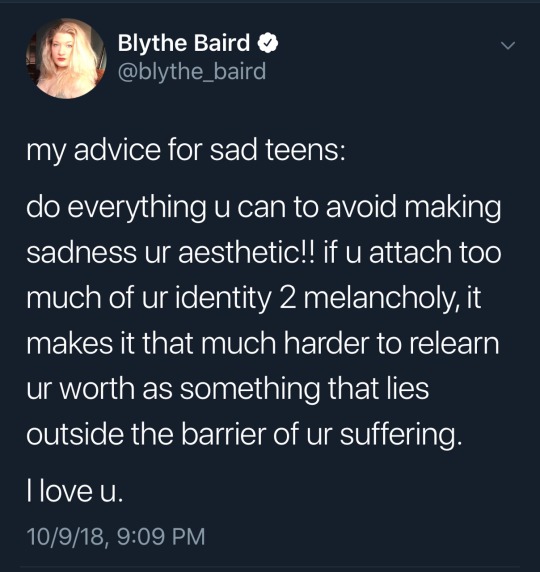
neo-somaliana:

16 Uncomfortable Feelings That Actually Indicate You’re On The Right Path

by Brienna Wiest

1. Feeling as though you are reliving your childhood struggles.You find that you’re seeing issues you struggled with as a kid reappear in your adult life, and while on the surface this may seem like a matter of not having overcome them, it really means you are becoming conscious of why you think and feel, so you can change it.

2. Feeling “lost,” or directionless. Feeling lost is actually a sign you’re becoming more present in your life – you’re living less within the narratives and ideas that you premeditated, and more in the moment at hand. Until you’re used to this, it will feel as though you’re off track (you aren’t).

3. “Left brain” fogginess. When you’re utilizing the right hemisphere more often (you’re becoming more intuitive, you’re dealing with emotions, you’re creating) sometimes it can seem as though “left brain” functions leave you feeling fuzzy. Things like focusing, organizing, remembering small details suddenly become difficult.

4. Having random influxes of irrational anger or sadness that intensify until you can’t ignore them anymore. When emotions erupt it’s usually because they’re “coming up” to be recognized, and our job is to learn to stop grappling with them or resisting them, and to simply become fully conscious of them (after that, we control them, not the opposite way around).

5. Experiencing unpredictable and scattered sleeping patterns.You’ll need to sleep a lot more or a lot less, you’ll wake up in the middle of the night because you can’t stop thinking about something, you find yourself full of energy or completely exhausted, and with little in-between.

6. A life-changing event is taking place, or just has. You suddenly having to move, getting divorced, losing a job, having a car break down, etc.

7. Having an intense need to be alone. You’re suddenly disenchanted with the idea of spending every weekend out socializing, and other people’s problems are draining you more than they are intriguing you. This means you’re re-calibrating.

8. Intense, vivid dreaming that you almost always remember in detail. If dreams are how your subconscious mind communicates with you (or projects an image of your experience) then yours is definitely trying to say something. You’re having dreams at an intensity that you’ve never experienced before.

9. Downsizing your friend group; feeling more and more uncomfortable around negative people. The thing about negative people is that they rarely realize they are negative, and because you feel uncomfortable saying anything (and you’re even more uncomfortable keeping that in your life) you’re ghosting a bit on old friends.

10. Feeling like the dreams you had for your life are collapsing.What you do not realize at this moment is that it is making way for a reality better than you could have thought of, one that’s more aligned with who you are, not who you thought you would be.

11. Feeling as though your worst enemy are your thoughts.You’re beginning to realize that your thoughts do create your experience, and it’s often not until we’re pushed to our wit’s end that we even try to take control of them – and that’s when we realize that we were in control all along.

12. Feeling unsure of who you really are. Your past illusions about who you ‘should’ be are dissolving. You feel unsure because it is uncertain! You’re in the process of evolving, and we don’t become uncertain when we change for the worse (we become angry and closed off). In other words: if what you’re experiencing is insecurity or uncertainty, it’s usually going to lead to something better.

13. Recognizing how far you still have to go. When you realize this, it’s because you can also see where you’re headed, it means you finally know where and who you want to be.

14. “Knowing” things you don’t want to know. Such as what someone is really feeling, or that a relationship isn’t going to last, or that you won’t be at your job much longer. A lot of “irrational” anxiety comes from subconsciously sensing something, yet not taking it seriously because it isn’t logical.

15. Having a radically intense desire to speak up for yourself.Becoming angry with how much you’ve let yourself be walked on, or how much you’ve let other people’s voices get into your head is a sign that you’re finally ready to stop listening, and love yourself by respecting yourself first.

16. Realizing you are the only person responsible for your life, and your happiness. This kind of emotional autonomy is terrifying, because it means that if you mess up, it’s all on you. At the same time, realizing it is the only way to be truly free. The risk is worth the reward on this one, always

source

peachieri:

Why I love “Choose Joy” over any other TAZ quote

Yall ever get that “why not just choose to be happy?!” Rhetoric as a teenager? That, make your own happiness shit? It always infuriated me.

The scene with Merle and John started like that. I visibly groaned. But it was later that really got me.

“I’ve found joy, honest to god, getting to know you. I’ve found joy playing chess with you. I haven’t enjoyed you know, getting my ass killed, but I find joy in whatever I do.”

Merle isn’t talking about choosing joy. It’s about finding it. It’s never about making the saddest moments happy just by willing it so, it’s about taking the good and the bad and finding moments of joy in between them. Embracing what is good and letting the bad highlight the joy. Merle isn’t happy getting killed, but he’s happy getting to know a friend. There’s joy in that, not because of or somehow through that.

“Because, at the end of the day, that’s all you got. It’s looking back at the joy you had, and the joy you found, and the joy you gave other people.”

This. This. This is why I love Merle. And to a greater extent, Clint. He’s not just “choosing joy” by changing his mood. He’s making an active choice to remember the good parts.

And that’s what makes this whole scene so special.

sunflorally:

so you dated the wrong person and learned a hard lesson. you chose the wrong major and had to start over again. you cherished a friend who backstabbed you. it sucks, but it’s also going to work out. that’s life; you learn, hurt, love, cry, laugh, and keep going. you experience setbacks and you grow and it’s all okay.

glittercracker:

mamoru:

thedoomcard11:

mamoru:

I am an old sage…listen closely to my wisdom before my soul withers away…

Teach us, o wise one

you are not an anime character. your actions impact others and do not only exist in theory. nobody is required to stick around for your tragic backstory or to learn the reasons behind your actions. if you treat people like garbage, they are allowed to think of you as a jerk and nothing more. nobody is obligated to analyze you or think twice when you hurt them. similarly, you are not required to stick around to listen to other people’s reasons for treating you like trash. you can call them a jerk, cut them out of your life, and call it a day.

Everyone in the world needs to read this and think about it hard. The end.

dsudis:

terpsikeraunos:

the main piece of advice i have for students is this: learn how to fail and persevere. it is a skill that will help you in life far more than perfect grades.

think of failure impersonally. when you fail, you have just eliminated one method that doesn’t work for you, so you need to try a different method in the future. figure out which factors contributed to the undesirable result, and change them. (teachers, advisors, and academic counselors can help you with this if you aren’t sure where to start).

i know from personal experience that fear of failure is often a self-fulfilling prophecy, because it leads to self-sabotage. if you can learn not to think of it as an inherent personal flaw, but rather as a strategy that didn’t work for you and can be changed, you will be well-equipped to face the inevitable failures and rejections that are part of life.

One of the most memorable experiences of my undergraduate education was when I got about two-thirds of the way through the semester in a Linguistics seminar and realized that I could not do the final project (a fifteen-page paper analyzing a metaphor theme, preferably in a foreign language: I was not competent in any foreign language and also still did not, at that point in the class, understand what fifteen pages of analysis of a metaphor theme could possibly look like.) (I still don’t today.)

Mathematically, if I didn’t pass the final project I wasn’t going to pass the class. I decided that I would just stop attending the class, since it was an exercise in misery and bewilderment and not accomplishing anything. But since there were only seven of us in the class and there was no way my absence would not be noticed, I decided to go to office hours and tell my professor that I was, effectively, dropping out of his class and accepting the consequences.

So I got there, sat down in front of his desk, and spit out the few sentences I had rehearsed to explain:  I hadn’t learned how to do what I had to do to pass the class, so I was going to fail and it didn’t seem worth anyone’s time to keep coming to class.

He did not argue with me or insist that I had to. (He also did not explain how to analyze a metaphor theme. Maybe it was not a thing that could be explained at office hours, or maybe he just recognized an undergraduate at the end of her rope.)

“Okay,” he said. “What have you learned?”

“Uh,” I said. “Well, I’ve done all the readings. They’re interesting, they just didn’t teach me how to analyze a metaphor theme.” (We had a book on metaphors that gave lots of examples of kinds of metaphors without any extensive analysis, and a wildly scattershot course pack that was half philosophy.)

“And what grade do you need in this class? What’s your GPA?”

I had a scholarship that depended on keeping an A- average, but I had some wiggle room and it was my senior year anyway, so I was unlikely to have it revoked for one semester. “Um. B? I mostly get As and Bs.”

“Okay,” he said. “Write me a paper on the readings, what you found most interesting and useful in them, and I’ll give you a B. And if you don’t learn anything else in college, learn this: everything can be negotiated.”

He gave me a B+. 

I graduated with honors, and also an intense experience of what Christians call grace: being given something I had not earned–could not have earned–simply because someone took mercy on me. But I had to acknowledge the failure to get there.